
Bethany’s sanctuary (the building where worship services are held) was one of hundreds built as a military chapel during World War II to encourage church attendance among soldiers.
First Lady Eleanor Roosevelt felt soldiers would gain a boost in morale if they could attend religious services in a military chapel (as opposed to a recreation hall or other venue). Under pressure from Mrs. Roosevelt, standardized plans for non-denominational army chapels were developed. Most were based on the concept of a traditional American New England church. Read more about the chapel project here.
Financing for about 600 military chapels—which amounted to $12.8 million—was signed into law by President Franklin Delano Roosevelt March 17, 1941.
According to the Office of Chief of Chaplains, “The chapel was planned to resemble the small country churches which dot the countryside of America … Simple dignity marks the outward appearance of the chapel, the construction being of clapboard on a wooden framework, set on a concrete foundation …”
Originally the U.S. Congress authorized the construction of 604 chapels to be built within six months; by the end of the war the number had increased to 1,137.
When the war concluded, many bases downsized, consolidated with others or closed … leaving these charming little chapels available for cost-conscious churches like Bethany to purchase and move to their own sites.
That’s how Bethany’s building—which served soldiers at the Stockton Army Air Field in nearby San Joaquin County—ended up here. Bethany paid just $2,000 for its very own 800 series WWII Ch-1 Regimental Army Chapel It was disassembled at the base in Stockton, then reassembled in the fall of 1950 at Bethany’s location, 2636-30th Street in Sacramento.
When impending Highway 99 construction caused Bethany to relocate, the chapel building was transported yet again … this time on a flatbed truck to 24th Street in 1955.
That’s a lot of miles for one building!
P.S. Have you noticed that Bethany’s sanctuary is different from all of the other military chapels? The steeple was traditionally mounted atop the chapel. When the military chapel was moved to 24th Street in 1955, the steeple had to be removed (it was replaced with a bell tower) because its height could possibly interfere with the flight path of the local airport. The steeple instead was placed on the roof of the less-tall Social Hall. Problem solved!
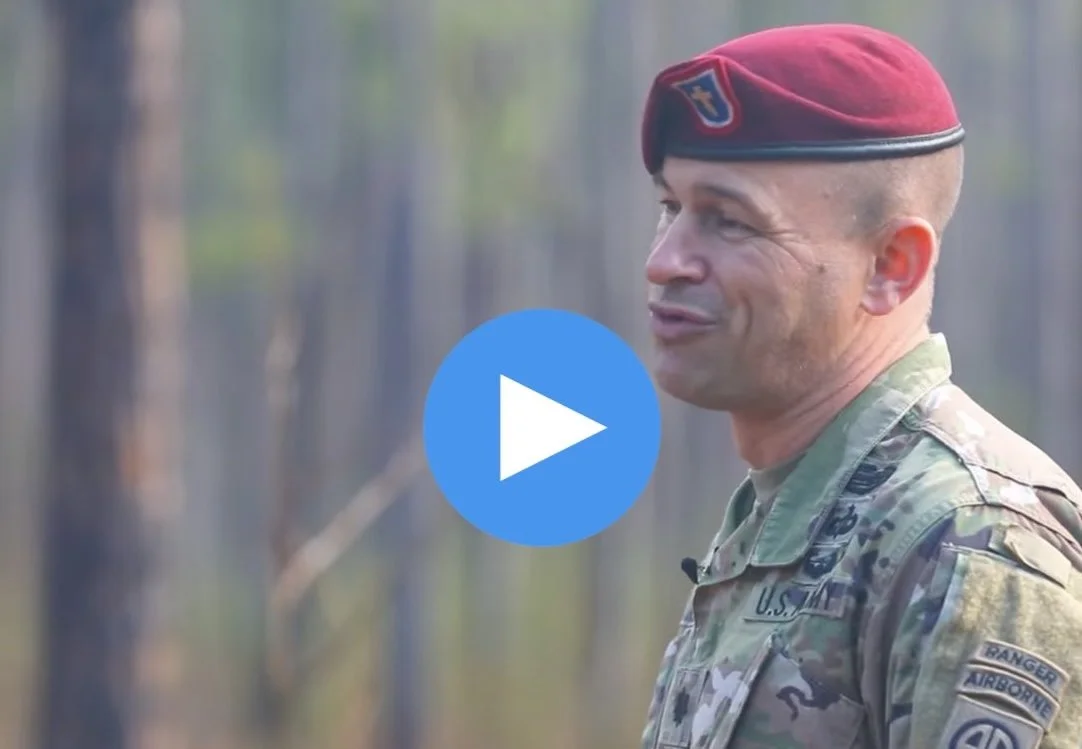
Chaplain (LTC) Brian Koyn of the 82nd Airborne Division tells how the WW II military chapels came to be.
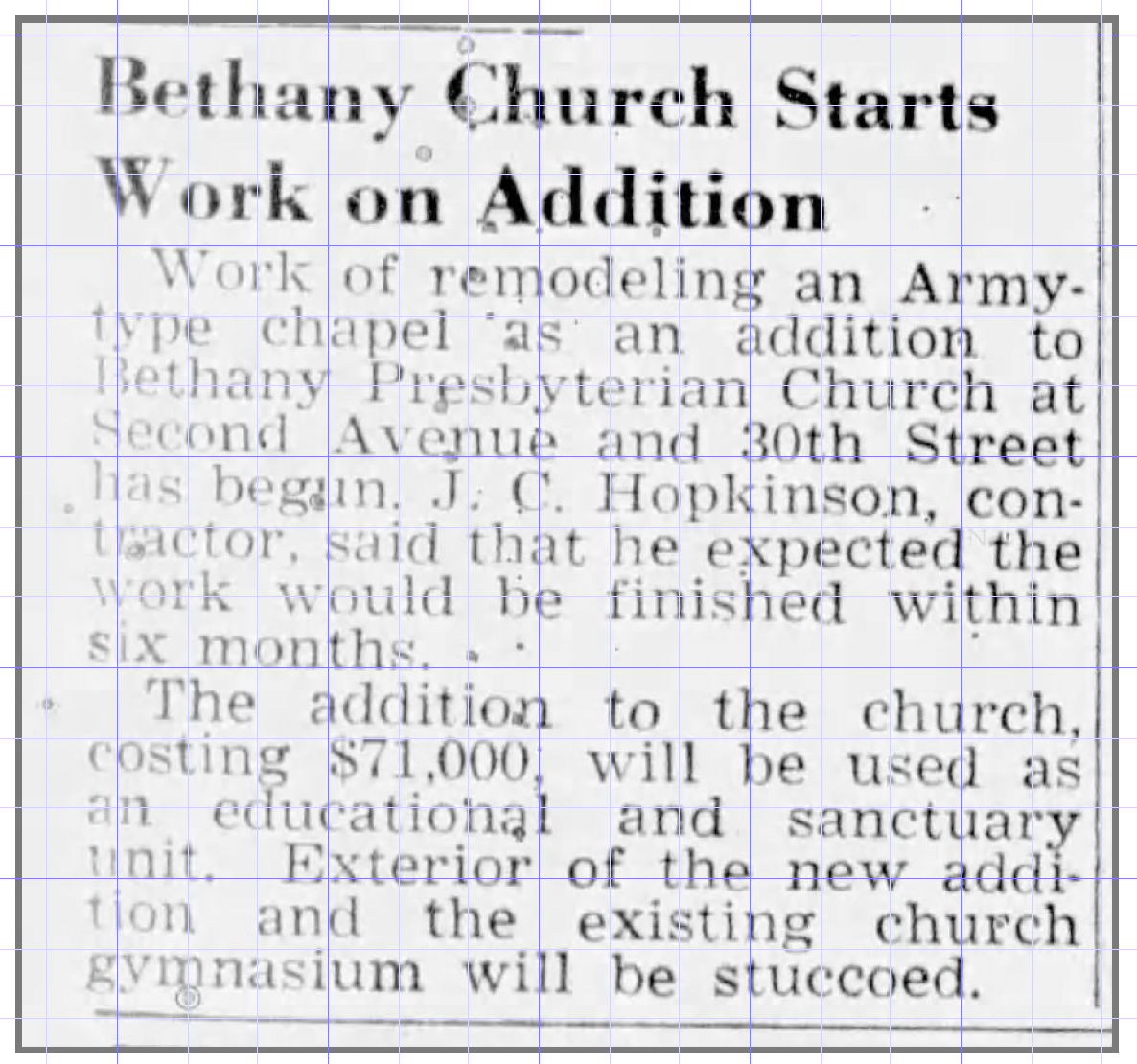
From The Sacramento Bee • February 26, 1950: Announcement of use of chapel by Bethany.
